Running a business comes with many responsibilities, and taxes are one of those things you just can’t ignore. For many people, the first time they try to File Corporate Taxes in Canada, it feels a bit confusing. There are forms, deadlines, and numbers everywhere.
Still, once you understand the flow, it starts making sense. It’s more about staying organized than doing anything complicated.
Table of Contents
What Does It Mean to File Corporate Taxes in Canada?
When you File Corporate Taxes in Canada, you are basically telling the government how your business performed during the year. You report your income, your expenses, and how much tax you owe.
Even if your company didn’t earn anything, you still need to file. That part surprises a lot of people in the beginning.
Who Actually Needs to File?
Not every small activity counts as a corporation. But if your business is incorporated, then you are required to File Corporate Taxes in Canada every year.
This applies if:
- Your company is registered as a corporation
- There was any kind of financial activity
- You want to claim a refund or tax credit
Even if nothing really happened in your business that year, filing is still expected.
Step-by-Step Process to File Corporate Taxes in Canada
Instead of rushing into forms, it helps to go step by step. That way, things don’t get messy.
Step 1: Gather Your Records
Start by putting all your documents in one place. Without this, things quickly get confusing.
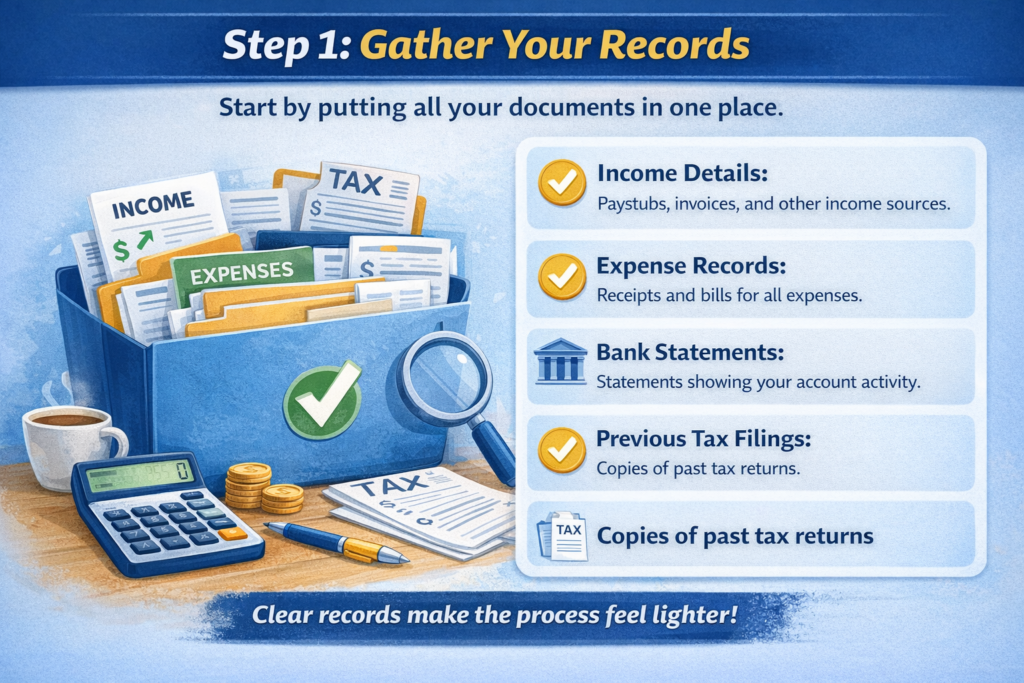
You will usually need:
- Income details
- Expense records
- Bank statements
- Previous tax filings
If your records are clear, the rest of the process feels much lighter.
Step 2: Check Your Fiscal Year
Every company follows a fiscal year, and it’s not always January to December. Before you File Corporate Taxes in Canada, make sure you know your exact year-end.
Also, keep this in mind:
- The filing deadline is usually 6 months after your year-end
- Payment deadlines may be earlier
Mixing these dates up is quite common, so it’s worth double-checking.
Step 3: Work Out Your Numbers
Now comes the part where you calculate your business income.
This includes:
- Total earnings
- Business expenses
- Final profit or loss
When you File Corporate Taxes in Canada, these numbers must be accurate. Even small mistakes can create issues later.
Step 4: Fill Out the T2 Form
The main form used to File Corporate Taxes in Canada is called the T2 return.
At first glance, it may seem long. Still, it’s just a combination of sections like:
- Company information
- Financial details
- Tax calculation
Taking it one section at a time makes it easier to handle.
Step 5: Decide How You Want to File
Some people prefer using software, while others go to an accountant. Both methods are effective.
If you are planning to File Corporate Taxes in Canada on your own, you can make use of the available software.
The available software includes:
- TurboTax Business
- TaxCycle
- Profile
If you have complicated finances, you may benefit from assistance.
Step 6: Submit Your Return
If you are ready, you can now File Corporate Taxes in Canada with the CRA.
Most business owners File Corporate Taxes in Canada online today. This method is faster and allows you to receive confirmation sooner.
Before you proceed, it would help to review everything you have done so far. This will help you avoid small mistakes.
Step 7: Pay What You Owe
After you File Corporate Taxes in Canada with the CRA, you may need to pay taxes.
If yes, you may proceed with the payment before the deadline passes. Otherwise:
- You may incur interest charges
- You may incur penalties
Even a small delay may cause you to pay more than you should.
Common Mistakes People Make
Some of these include:
- Missing deadlines
- Entering wrong figures
- Forgetting certain income
- Not keeping proper records
These things mostly happen to people who are in a hurry to finish the process.
Why Filing Properly Matters
When you File Corporate Taxes in Canada properly and on time, it keeps your business in a safe position.
It also helps in:
- Avoiding penalties
- Keeping your records clean
- Building trust if you are to apply for any loan
Taxes are important because, if ignored, they can lead to more serious problems in the future.
Final Thoughts
The first time you File Corporate Taxes in Canada, it may take longer than expected. That’s normal. After going through it once, the next time feels more familiar.
There’s no need to rush the process. Staying organized and checking your details carefully makes a big difference. Over time, it becomes just another part of running a business.
Stay connected with us for updates and expert insights on Facebook and Instagram.
FAQs
1. Do all companies need to file corporate taxes in Canada?
Yes, all incorporated businesses must file, even if there is no income.
2. What is the deadline for filing?
Usually, it is 6 months after the fiscal year ends.
3. Can I file taxes without an accountant?
Yes, many people use software and handle it themselves.
4. What happens if I miss the deadline?
You may have to pay penalties and extra interest.
5. Which form is used for filing?
The T2 Corporation Income Tax Return is used.