For most small business owners in Canada, tax filing is something that comes around every year without fail. It’s not the most exciting task, but it is something that cannot be skipped. One of the first things to understand in this process is the Deadline for Corporate Tax Filing in Canada. Once this is clear, a lot of confusion disappears on its own.
Many people start thinking about taxes only when the deadline is approaching. That usually creates pressure. With a bit of early planning, the whole process becomes easier to manage.
Table of Contents
What the Deadline Actually Means
The Deadline for Corporate Tax Filing in Canada refers to the final date by which a corporation must submit its tax return to the CRA for a given fiscal year.
In simple terms, the rule most businesses follow is:
The tax return must be filed within 6 months after the end of the fiscal year
So, if your business year ends in March, the deadline will fall in September. This timeline stays the same for most small businesses, whether they are earning profit or not.
Why Small Businesses Should Pay Attention
The Deadline for Corporate Tax Filing in Canada is not just another date on the calendar. It plays an important role in keeping your business compliant.
If the filing is done on time:
- Penalties are avoided
- Records are kept up to date
- CRA compliance is ensured
- Financial planning is easier
On the flip side:
- If the deadline is not adhered to, complexities may arise.
- Filing Deadline and Payment Deadline Are Different
This is the point where many small business owners get confused. The Deadline for Corporate Tax Filing in Canada is not always the same as the payment deadline.
Filing deadline: 6 months after fiscal year-end
- Payment deadline: usually 2 months after the fiscal year-end
- Some CCPCs may have 3 months for payment
Because of this difference, it helps to track both dates separately instead of treating them as one.
Preparing Before the Deadline
Reaching the Deadline for Corporate Tax Filing in Canada becomes much easier when the preparation is already done.
Before filing, businesses usually need:
- Income statements
- Expense records
- Bank statements
- Invoices and receipts
- Payroll information, if applicable
When these details are organized, filing does not feel overwhelming.
A Habit That Makes Things Easier
Instead of waiting until the last moment, many small businesses keep their records updated throughout the year.
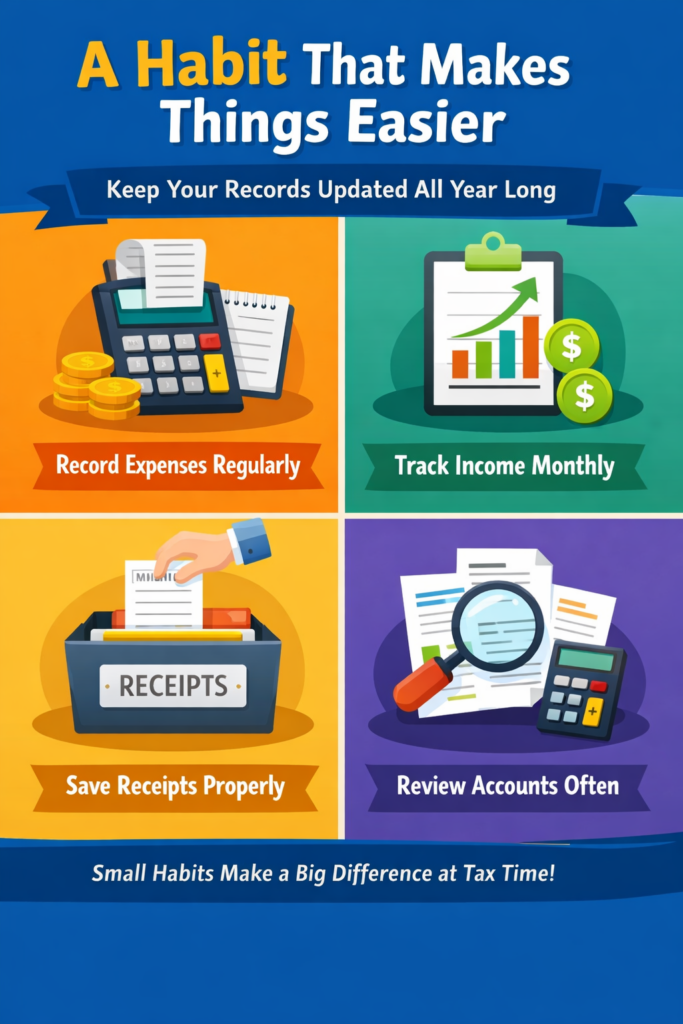
This includes:
- Recording expenses regularly
- Tracking income month by month
- Saving receipts properly
- Reviewing accounts from time to time
These simple habits make a noticeable difference when the Deadline for Corporate Tax Filing in Canada approaches.
Mistakes That Often Happen
Small businesses sometimes run into issues while dealing with the Deadline for Corporate Tax Filing in Canada, and most of them are avoidable.
Some of them are:
- Starting too late
- Missing important documents
- Entering incorrect numbers
- Failure to file when there is no income
- Confusing payment and filing deadlines
These are all errors that occur when things are done in a rush instead of planning ahead.
What If the Deadline Is Missed
Missing the Deadline for Corporate Tax Filing in Canada is not something that should be taken lightly.
The CRA may impose:
- Late filing penalties
- Interest on unpaid taxes
- Other penalties depend on the delay
Even a small delay can add up to a lot of money. This is why it is always best to stick to the deadlines.
Simple Ways to Stay on Track
Managing the Deadline for Corporate Tax Filing in Canada becomes easier with a bit of planning.
Some of the useful practices are:
- Reminders well in advance
- Keeping the financial records up to date
- Review of figures before filing
- Use of accounting software
- Seeking assistance when the situation is complex
By following these steps, the situation is avoided at the last moment.
Final Thoughts
The deadline for Corporate Tax Filing in Canada is an essential part of running a small business. It might seem like an ordinary process, but it plays an important role in the business’s compliance and stability.
It is easier once the business becomes consistent. Over time, filing taxes turns into a regular yearly activity rather than something stressful.
Follow Razer Accounting on social media for the latest updates, financial tips, and expert guidance on
Facebook and Instagram.
FAQs
1. What is the corporate tax filing deadline in Canada?
It is usually 6 months after the end of the fiscal year.
2. Is the filing deadline the same as the payment deadline?
No, it is usually earlier.
3. Do small businesses need to file if they have no income?
Yes, filing is still required.
4. What happens if I miss the deadline?
You may face penalties and interest charges.
5. Can I handle corporate tax filing myself?
Yes, many small businesses use software or basic guidance to file.